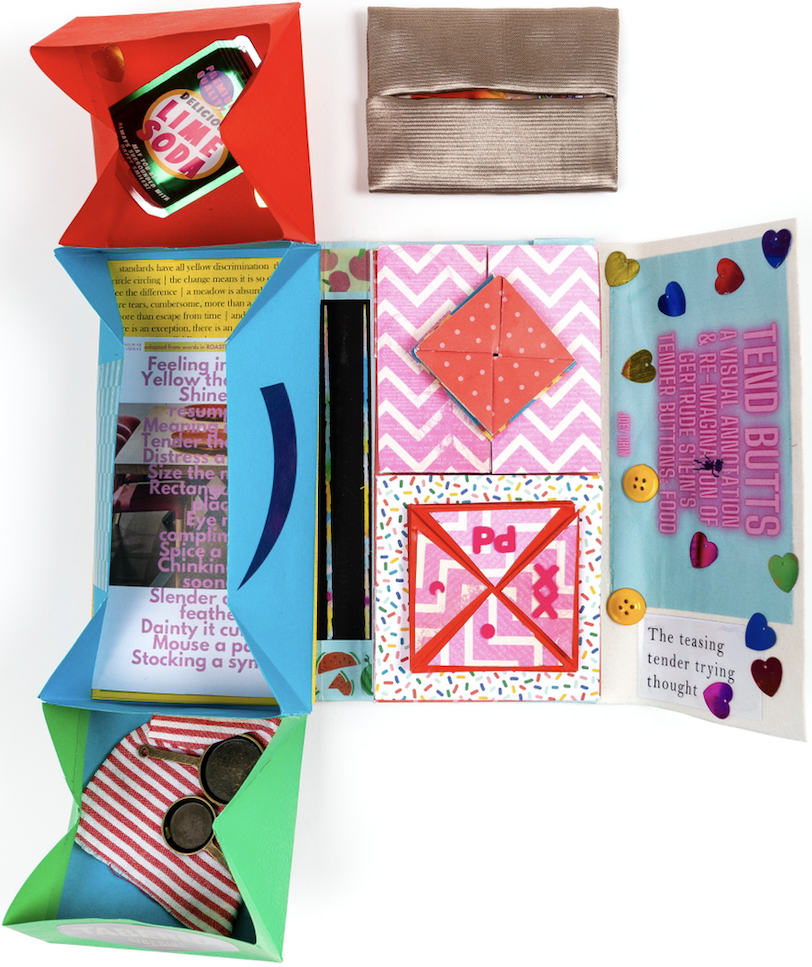
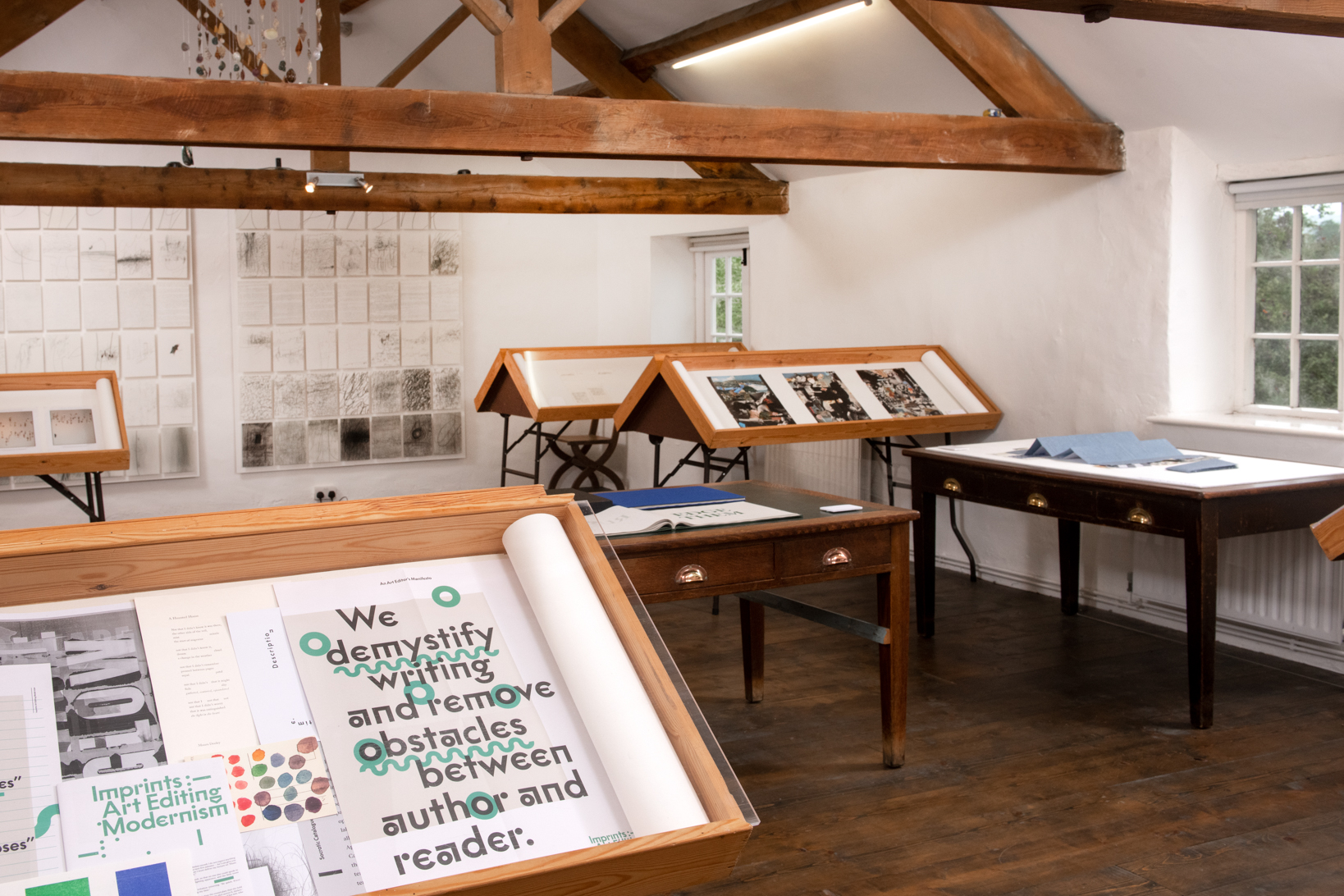
Tend Butts is an artist’s book commissioned for Imprints: Art Editing Modernism exhibition.
Tend Butts
2021
Mixed media, 33x21cm
Surprise and outrage were the more common responses from friends reading Gertrude Stein’s Tender Buttons.
How and why was this written?
Nonsense. (Literally, not the literary genre.)
Easy to write and difficult to read.
Over a century has passed since Tender Buttons was written; yet time does little to change initial reactions.
I speak English as virtue of being born in the postcolonial trading post of Singapore; Mandarin due to the diaspora; and some Greek, the only language I learn out of choice. Reading Tender Buttons was an experience and experiment in camaraderie, humour, and sometimes, coincidence and universality.
Reading the segment on CHICKEN, various Chinese slangs came to mind. A female prostitute is chicken, while a male prostitute is another bird: the duck. Sex, paying for or paid, comes with connotations of peculiarity and the taboo. In that sense, sex and bird, Chinese and English, well, ultimately, what’s sauce for the goose is sauce for the gander, literally and literary: as a conceptual metaphor, they are all birds to me – it may not be impossible that you and I read the same.
Someone mentioned Tender Buttons was written as though as it was churned out by a creative writing generator: random and strange. These writing generators are often sites for short stories, artist statements or poems with fields for words to be entered by the user. The results are sometimes hilarious, appalling, accurate – to be taken as seriously as a horoscope found on the newspapers (or not). Today, in the age of erasure websites, media, algorithm, electronic and code poetry, what is the role of a poet?
Using predictive messaging from my mobile phone and using the list which opened Food, one of the texts in Tend Butts is a patchwork and cacography poetry of Stein’s vocabulary, textonyms, and user-sensitivity (mine). Some words that were suggested included “Adela” a colleague I was most recently communicating with, “green bean”, “soup”, “milk tea”, “rice” – a large part of my diet.
Tend Butts is housed within the artist’s book format of the zhenxianbao. Meaning needle thread bag in Chinese, the zhenxianbao is a traditional domestic object used by the Dong and Miao minorities in China. Made of paper, it would consist of numerous pockets with the purpose of storing sewing-related items like buttons, needles, thread, patterns or other flat objects.
With the numerous containers in Tend Butts including a self-recording sound module chip, erasure and predictive text poetry, a mini pocket of fabric and buttons (“tender buttons”), surrealist collages, and a scratchboard amongst other discoveries, I imagined that the zhenxiaobao would open up to the numerous rooms and surprises towards language and writing, expanding the definitions of a “book” and ultimately, a new way of reading.
It takes a long time to return to the start of that bridge we first stood at before our acquisition of syntax conventions and rules that defined, and later, narrowed how we decipher and read.
Returning to the comment of Tender Buttons being stupid, writing something as strange is difficult. Indeed, it’s not easy at all.
 Joey Chin